Strabismus
Eye Deviation (Strabismus)
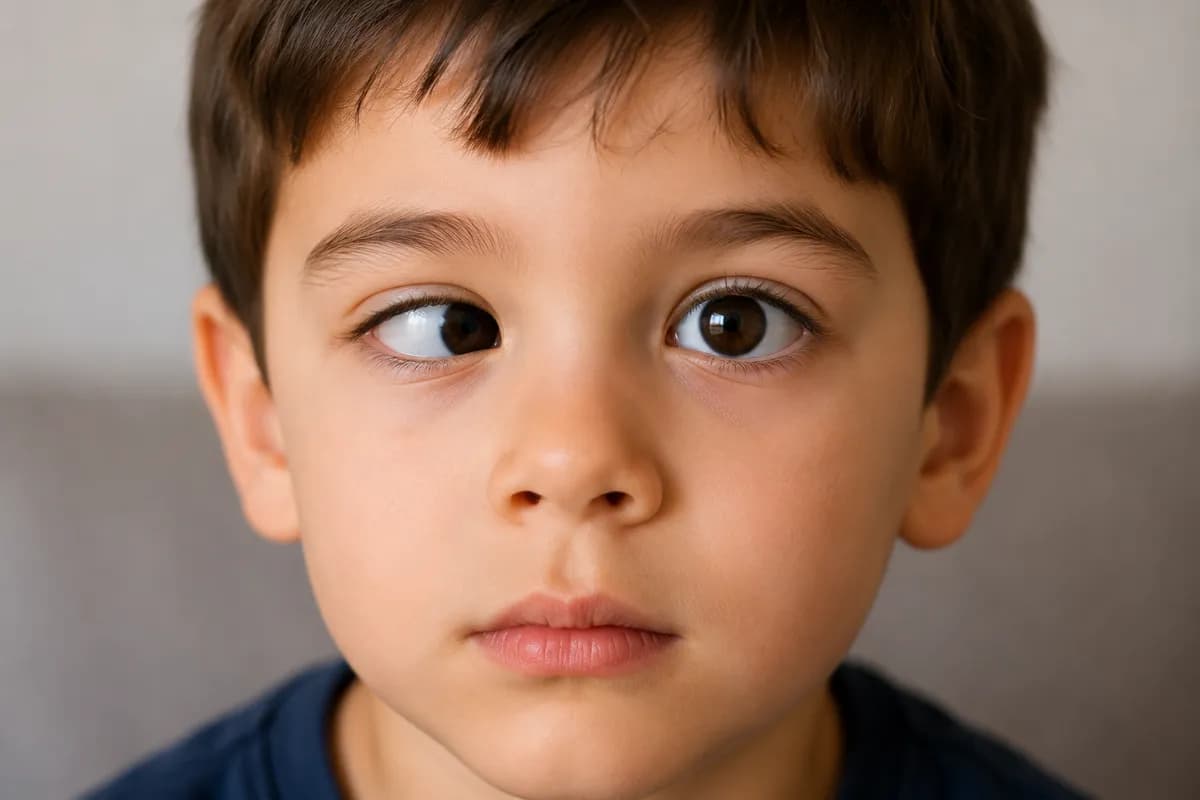
Eye deviation, also called strabismus (squint or crossed eyes), is a condition in which the eyes are not coordinated with each other and do not remain aligned in the same direction simultaneously.
In this condition, one eye may deviate inward (toward the nose – esotropia) or outward (toward the ear – exotropia), or may be displaced upward or downward, while the other eye remains normally positioned and focused.
The causes of eye deviation include abnormalities of the eye muscles and the nerves controlling eye movements, neurological disorders, trauma, and refractive errors such as hyperopia (farsightedness).
Currently, one of the factors that can contribute to the development or worsening of eye deviation is failure to follow proper visual hygiene while using digital devices, especially smartphones.
Eye deviation can be constant or intermittent, and depending on its type, the symptoms and treatment methods may vary.
Latent deviation (phoria) appears only under certain conditions such as fatigue or stress. In intermittent deviations, the eyes become misaligned from time to time.
What Are the Complications of Eye Deviation?
Eye deviation (strabismus), especially in children, can become worse if left untreated and may increase the risk of permanent visual impairment (amblyopia or lazy eye).
If the eyes are not properly aligned during the appropriate period of visual development, the following complications may occur:
Amblyopia (lazy eye): decreased vision that may become irreversible if not treated
Reduced quality of binocular vision and impaired depth perception
Double vision, especially at older ages
Eye strain and headaches
Low self-confidence and psychological consequences
Timely diagnosis and treatment of eye deviation, especially in children, are extremely important for maintaining visual health and preventing long-term complications.
Amblyopia (Lazy Eye)
The normal alignment of the eyes during the development of the visual system in childhood, especially during the first years of life, allows proper visual development.
However, abnormal conditions such as:
Uncorrected refractive errors
Obstruction of the visual axis
Different types of eye deviations
can interfere with visual development during the first decade of life and result in decreased vision that may become irreversible if untreated. This condition is called amblyopia.
In this situation, the brain recognizes the image from the better-seeing eye and suppresses or ignores the image from the weaker (amblyopic) eye.
Amblyopia can be treated by patching the stronger eye to stimulate and improve vision in the weaker eye.
If amblyopia is detected during the early years of life, treatment is often successful. However, if treatment is delayed, amblyopia may become permanent.
The important point is that the earlier amblyopia is treated, the better the child’s vision can be preserved.
If one eye moves out of its normal position due to strabismus, two different images are sent to the brain. In a young child, this condition causes the brain to gradually ignore the image from the deviated eye and accept only the image from the straight eye (the eye with better vision).
Over time, this leads to loss of depth perception and binocular vision.
Unfortunately, in children, suppression of the image from the deviated eye happens quickly and results in amblyopia (lazy eye).
In adults, however, because the brain has already developed the ability to receive and process images from both eyes, it cannot easily suppress the image from the deviated eye. Therefore, strabismus in adults usually causes double vision (diplopia).
Pseudostrabismus (False Eye Deviation)
In this condition, a child’s eyes may appear to be turned inward or outward, although the eyes are actually aligned normally.
The first type is common in infants and young children and is caused by:
A wide nasal bridge
A skin fold between the nose and the inner corner of the eye (epicanthal fold)
This condition gradually improves as the facial structures develop.
The second type, which is less common, occurs when the eyes appear to be deviated outward, but they are actually aligned normally. This appearance is due to the specific facial structure.
To distinguish true strabismus from pseudostrabismus, a complete eye examination by an ophthalmologist is recommended.
Treatment of Eye Deviation (Strabismus)
If eye deviation is diagnosed and treated at the appropriate time, it can often be corrected with excellent results.
The goals of strabismus treatment are:
Preserving vision
Straightening the eyes
Restoring binocular vision
Depending on the cause of strabismus, treatment may include:
Prescription of glasses
Eye patching
Correction of other underlying causes
Changing the position or balance of the eye muscles through surgery
Eye exercises or vision therapy may be effective in some types of strabismus, especially convergence insufficiency (a type of exotropia).
Although eye exercises alone are not sufficient to treat all cases of eye deviation, they may help reduce double vision and improve eye movement control in intermittent strabismus.
Botulinum toxin injection (Botox) can weaken an eye muscle that is excessively active.
These treatments may be used together with surgery or instead of surgery, depending on the patient’s condition.
Eye Patching and Atropine Drops
Accepting the use of an eye patch by infants or young children can be challenging. However, most children gradually become accustomed to wearing it.
Wearing an eye patch becomes part of their daily routine, similar to getting dressed in the morning.
Nevertheless, some children may refuse to wear the patch.
In these situations, atropine eye drops may be used instead of patching.
Just as an eye patch blocks vision in the healthy eye, atropine temporarily blurs vision in that eye.
This forces the weaker eye to work harder and helps strengthen eye function and vision.
Strabismus Surgery
Strabismus surgery is performed under general anesthesia.
A small incision is made in the tissue covering the eye to access the eye muscles. The eyeball itself is not removed from its normal position.
Which muscles are operated on depends on the type of deviation and the surgeon’s treatment plan.
Sometimes surgery on both eyes is necessary.
Recovery after strabismus surgery is usually relatively quick.
Eye redness may remain for several weeks and gradually decreases with the use of prescribed eye drops. Most patients return to their normal daily activities within a few days.
After surgery, glasses or prism lenses may sometimes still be required.
Sometimes the amount of correction achieved may be greater or less than intended, and in such cases, repeat surgery may be necessary.
In cases of congenital strabismus, early surgical correction is usually recommended because restoring eye alignment at a young age increases the possibility of achieving normal vision and improving binocular visual function.
Like any other surgical procedure, eye muscle surgery may have complications, including:
Infection
Bleeding
Other rare complications
However, strabismus surgery is generally considered a safe and effective treatment.
It should be noted that surgery does not replace the need for glasses or treatment of amblyopia.
Important Notes
Accommodative esotropia (inward eye deviation caused by focusing effort) can be corrected with glasses.
A child’s natural growth does not correct strabismus by itself.
The earlier eye deviation is treated, especially during childhood, the more effective the treatment will be.
Straightening the eyes is possible at any age.
Treatment of strabismus may sometimes be performed without surgery using eye drops, eye exercises, or glasses.
If surgery is required, performing it at a younger age increases the chance of achieving good binocular vision.

please Login to leave a comment
Add Your Comment
Reviews