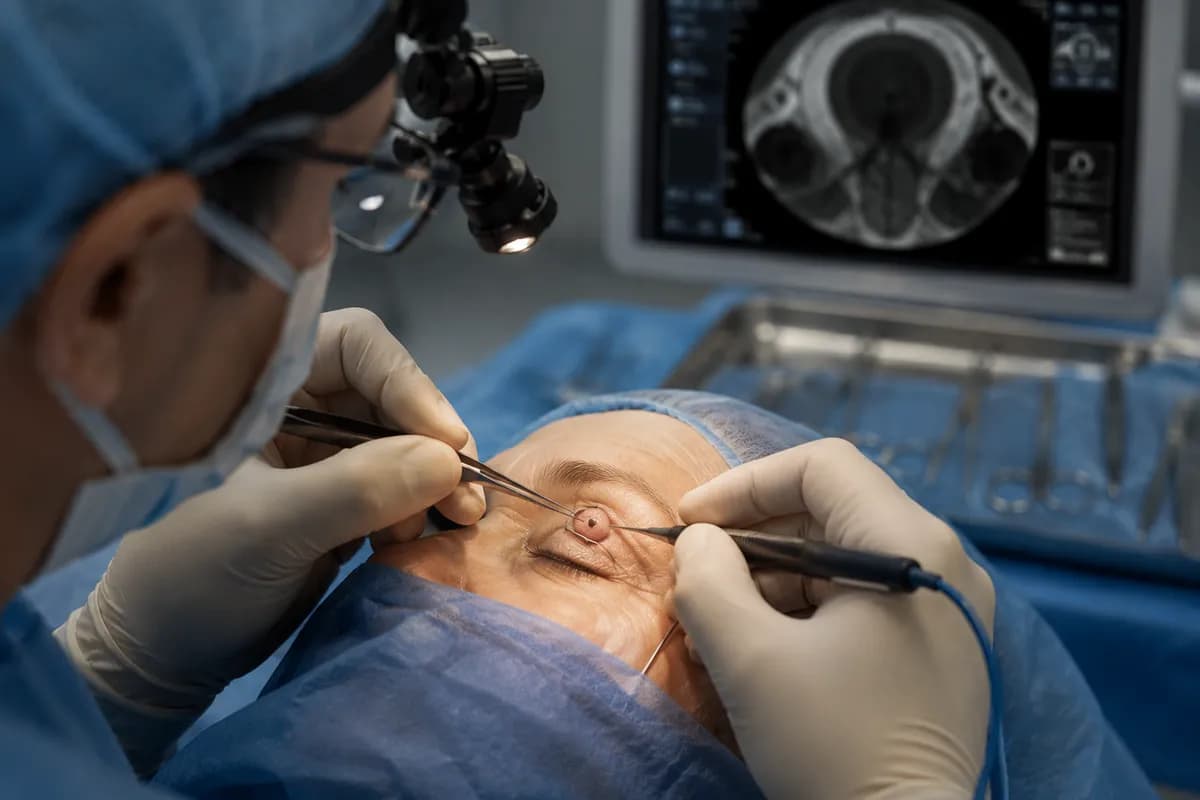
Eyelid and Orbital Tumor Surgery; Treatment of Periocular Lesions While Preserving Function and Aesthetics
Eyelid and Orbital Tumor Surgery; Treatment of Periocular Lesions While Preserving Function and Aesthetics
Eyelid and orbital tumors are among the conditions that can affect the delicate structures around the eye. These tumors may be benign or malignant, and depending on their type, size, location, and growth rate, they may require different evaluations and treatment approaches.
Eyelid and orbital tumor surgery is one of the main treatment methods, performed with the goals of completely removing the lesion, preserving eye health, preventing disease progression, and restoring the natural appearance of the area around the eye.
What Are Eyelid and Orbital Tumors?
The eyelids and the eye socket (orbit) contain various tissues, including skin, muscles, glands, fat, and supporting structures. Abnormal cell growth in these areas can lead to the formation of tumors.
These tumors are generally divided into two main categories:
Benign tumors:
Usually grow more slowly and do not spread to other parts of the body.
Malignant tumors:
May invade surrounding tissues or spread to other areas of the body and require more specialized treatment.
Symptoms of Eyelid and Orbital Tumors
Symptoms may vary depending on the type and location of the tumor. Common signs include:
A lump or mass on the eyelid or around the eye
Changes in eyelid shape or thickening of the eyelid
A wound or lesion that does not heal
Loss of eyelashes in the affected area
Change in eye position or bulging of the eye (exophthalmos)
Pressure or pain around the eye
Blurred vision or limited eye movement
When Is Eyelid and Orbital Tumor Surgery Performed?
After a specialized eye examination and necessary evaluations such as imaging or biopsy, the appropriate treatment method is selected.
Surgery is usually recommended in the following cases:
Presence of suspicious or malignant tumors
Significant growth of the lesion
Impaired eyelid function or vision problems
Noticeable changes in appearance
Need for accurate diagnosis through biopsy
Surgical Methods for Eyelid and Orbital Tumors
The type of surgery depends on the location and characteristics of the tumor. Common procedures include:
Eyelid Tumor Removal
In this procedure, the tumor is removed along with a margin of surrounding healthy tissue to reduce the possibility of remaining abnormal cells. If necessary, eyelid reconstruction is performed to preserve normal function and appearance.
Orbital Tumor Surgery
Tumors inside the orbit require extremely high precision due to their proximity to the optic nerve, eye muscles, and other sensitive structures. The goal of surgery is to remove the lesion as safely as possible while preserving eye function.
Eyelid Reconstruction After Surgery
In cases where a significant portion of the eyelid is removed, reconstructive surgery may be performed to restore eyelid structure, protect the eye surface, and achieve an appropriate aesthetic result.
The Importance of Surgeon Expertise in Treating Periocular Tumors
Due to the sensitivity of the area around the eye, eyelid and orbital tumor surgery requires specialized knowledge and experience in delicate ophthalmic and reconstructive procedures. Preserving vision, eyelid function, natural eye movement, and facial harmony are among the most important goals of this surgery.
Postoperative Care
Following the doctor's instructions after surgery plays an important role in the recovery process. Care may include:
Regular use of prescribed medications and eye drops
Proper care of the surgical site
Periodic follow-up visits to monitor healing
Necessary examinations to ensure the tumor has not returned
Eyelid and orbital tumor surgery is performed to treat lesions, preserve eye health, and achieve the best possible functional and aesthetic outcomes. Early diagnosis and choosing a specialized surgeon can play an important role in treatment success
please Login to leave a comment
Add Your Comment
Reviews