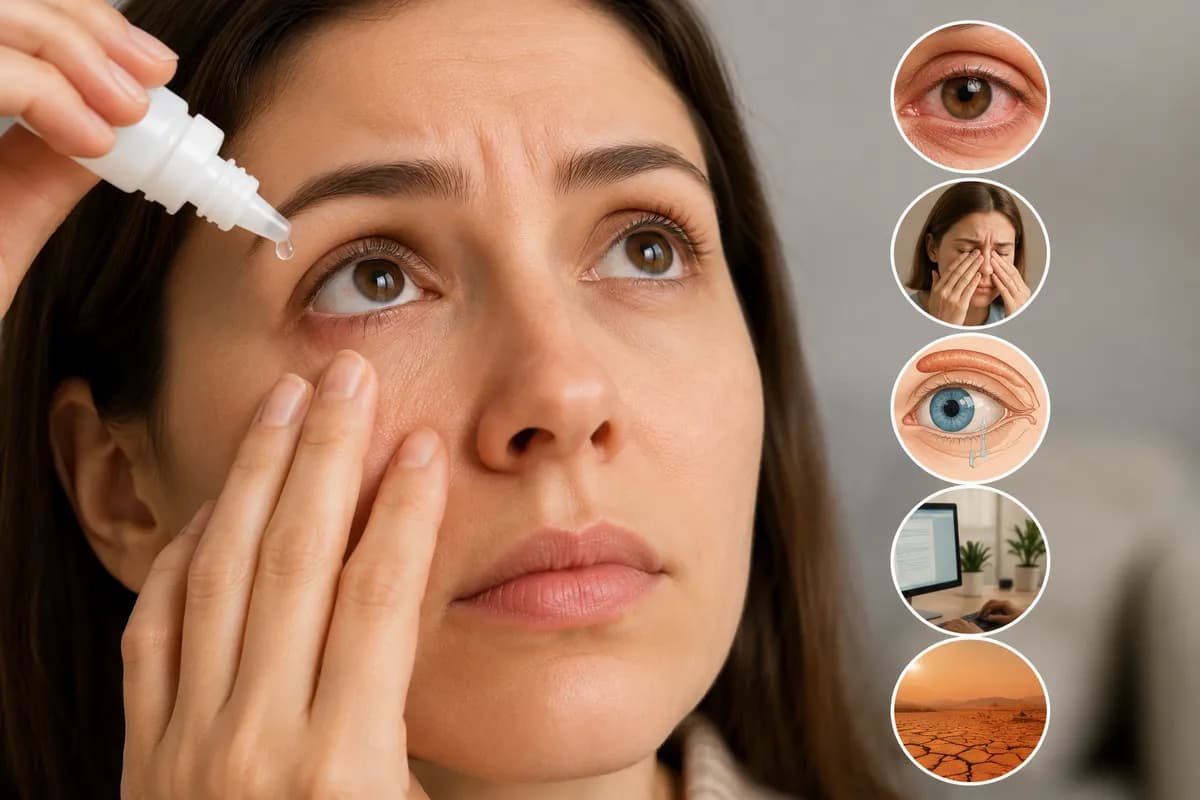
Is Dry Eye Dangerous? Understanding Symptoms, Causes, and Treatment Methods
Is Dry Eye Dangerous? Understanding Symptoms, Causes, and Treatment Methods
Dry eye is one of the most common eye conditions that occurs when the eyes are unable to produce enough tears or when the quality of the tears is inadequate. Tears play an important role in maintaining the health of the eye surface, providing clear vision, and protecting the eyes from environmental factors.
In most cases, dry eye is not a dangerous condition and can be controlled with simple methods. However, if it remains untreated for a long time or becomes severe, it may damage the eye surface and lead to more serious complications.
Symptoms of Dry Eye
Dry eye may be associated with various symptoms, including:
Burning or itching sensation in the eyes
Feeling of a foreign body or sand in the eye
Eye redness
Excessive tearing
Temporary blurred vision
Eye fatigue
Sensitivity to light
Difficulty using computers or mobile phones for long periods
Can Dry Eye Damage the Eyes?
In mild cases, dry eye usually does not cause permanent damage. However, if it is severe or persistent, it may lead to complications such as:
Inflammation of the eye surface
Damage to the transparent front layer of the eye (cornea)
Development of superficial corneal ulcers
Increased risk of eye infections
Reduced vision quality
Therefore, chronic dry eye requires proper evaluation and treatment.
Causes of Dry Eye
Various factors can contribute to dry eye, including:
Long-term use of computers and mobile phones
Reduced blinking while concentrating
Aging
Exposure to wind, dust, or dry air
Long-term use of contact lenses
Certain diseases or medications
Problems with tear-producing glands
Methods for Managing and Treating Dry Eye
Treatment for dry eye depends on its severity and underlying cause. Helpful approaches include:
Using artificial tears prescribed by an eye doctor
Taking regular breaks while using digital screens
Following the 20-20-20 rule
Reducing exposure to direct airflow from air conditioners or fans
Increasing environmental humidity
Drinking enough water
Maintaining proper eyelid hygiene
In more severe cases, an ophthalmologist may recommend specialized treatments such as anti-inflammatory medications, therapies to improve tear production, or treatment of eyelid gland disorders.
When Should You See an Eye Doctor?
A specialized eye examination is recommended if you experience:
Severe or long-lasting dry eye symptoms
Eye pain
Reduced vision
Persistent redness
Severe sensitivity to light
Unusual eye discharge
Symptoms that do not improve with regular care
Dry eye is controllable in most people, but ignoring severe or chronic dryness can affect the health of the eye surface. Identifying the underlying cause and choosing the appropriate treatment method are the best ways to maintain eye health and preserve vision quality.
please Login to leave a comment
Add Your Comment
Reviews